Our Mental Health, Their Mental Illness: Blurry Boundaries in the Twenty-First Century
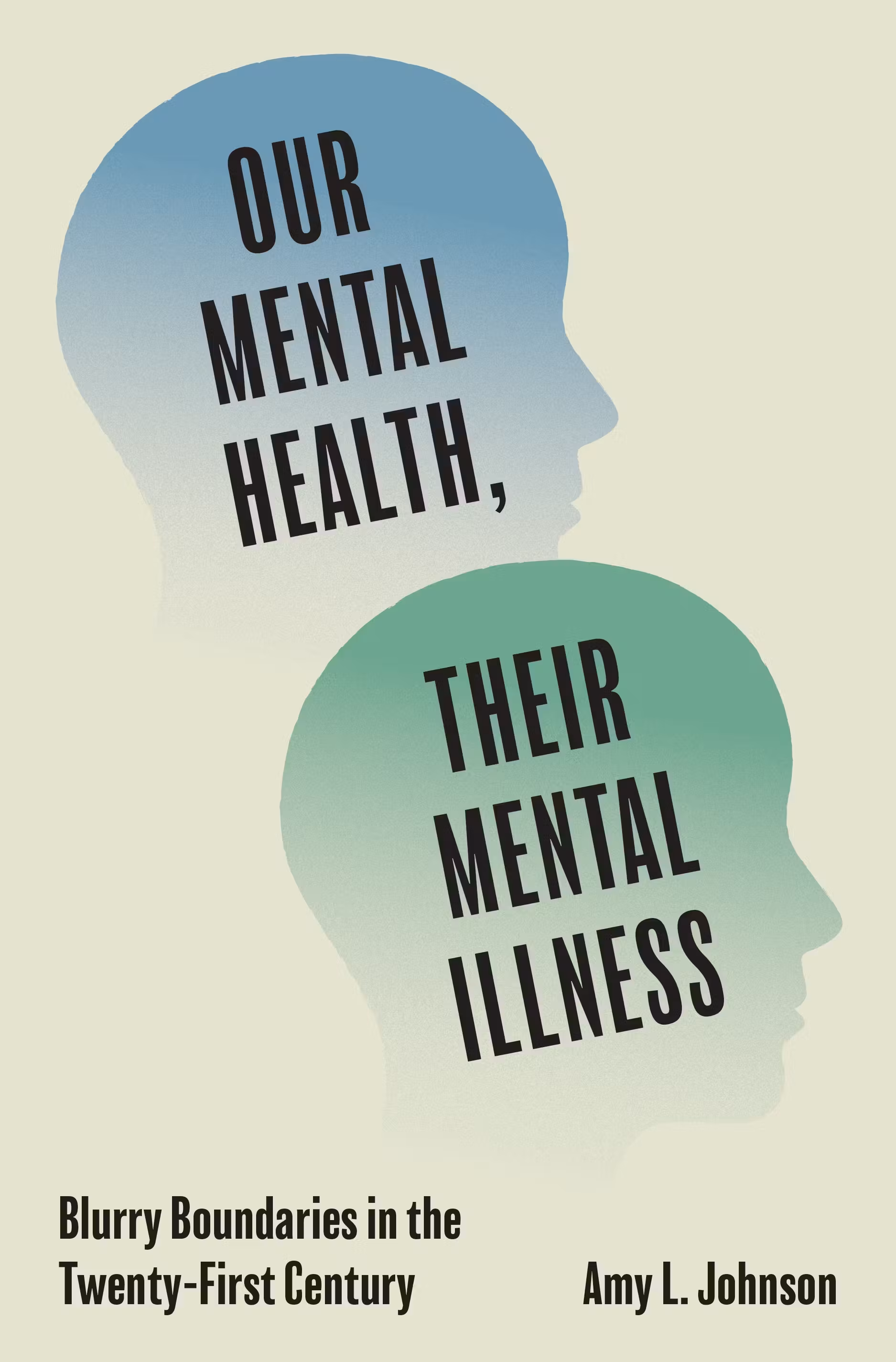
Discussions about mental health are ubiquitous, and individuals’ “challenges,” “struggles,” and “crises” are frequent fodder for media coverage and online content. Mental illness, however, is strikingly absent from these conversations. Why are we comfortable talking about mental health but not about mental illness? In Our Mental Health, Their Mental Illness, Amy Johnson argues that as these two terms became widely shared cultural ideas, their meanings diverged. People can struggle with their mental health and still be considered “normal”; meanwhile, the language of mental illness is deployed to describe those who are perceived as abnormal—–or even dangerous. Drawing on articles from major US newspapers published between 1980 and 2020 and Reddit posts from 2019 to 2023, Johnson explores how the public came to understand mental health and mental illness as two sides of a social—and not simply medical—boundary.
Employing methods of computational text analysis as well as qualitative close reading, Johnson shows that despite open discussions of mental health, mental illness remains a stigmatized category, broadly used to denigrate certain groups and often deployed as an explanation for violent acts. The boundary between mental health and mental illness, drawn by actors other than medical professionals, clearly delineates who is normal and who is not, creating an axis of inequality that intersects with other axes such as race and gender. The twenty-first century focus on mental health has not created universal acceptance but has instead contributed to social division.
Our Mental Health, Their Mental Illness is forthcoming in April 2027. You can preorder your copy on Princeton University Press’s website, Amazon, or Bookshop.org.
You can read an article about my project here.
Advance Praise
“The book is a significant contribution. The cultural toolkit behind ‘mental illness’ and ‘mental health’ has not been explored before, and the idea that mental health, as constituted today, is a new and significant concept rings absolutely true.” — Jason Schnittker, author of Unnerved: Anxiety, Social Change, and the Transformation of Modern Mental Health
“There are many contemporary books about the ubiquity of medicalization, the spread of diagnostic categories, or the rise of wellness paradigms. However, this book is unique in that it grounds these claims in systematic textual data and shows the flip side of the normalization of mental health in the ongoing stigmatization of mental illness.” — Alex V. Barnard, author of Conservatorship: Inside California’s System of Coercion and Care for Mental Illness
Press
“Mining Digital Discourse: How Cultural Ideas About Mental Health Shape Public Understanding.” Lehigh University College of Arts and Sciences. Link